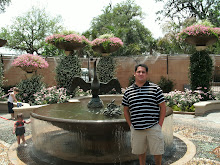
LITTLETON, Colo. – Math teacher David Benke says he had no time to fear for his life when he tackled a man he said was preparing to reload a rifle to shoot students at a Colorado middle school who were heading home for the day.
And Benke doesn't consider himself a hero for stopping the 32-year-old accused of wounding two students Tuesday at the Littleton school that's just miles from Columbine High School, the site of one of the nation's deadliest school shootings.
"You know, it bugs me that he got another round off," Benke said of the two shots that authorities say Bruco Strongeagle Eastwood fired.
On Tuesday, Jefferson County Sheriff Ted Mink praised Benke, calling him a hero. Benke, the father of 7-year-old twins and a 13-year-old girl, fought back tears after Mink thanked him.
"I know he feels bad about not being able to intervene sooner, but believe me when I say, I think he stopped what could have been a more tragic event than it was this afternoon," Mink said.
The victims, Deer Creek Middle School students Reagan Webber and Matt Thieu, were both treated at Littleton Adventist Hospital. Spokeswoman Christine Alexander said Webber was treated and released to her home, and Thieu was transferred to another hospital.
Authorities say both victims had surgery Tuesday.
Benke and other teachers were monitoring the parking lot in the afternoon when Benke heard what he thought was a firecracker and began walking toward the noise.
"At first when I was walking over there, it was kind of what a teacher does," Benke said, still shaken hours after Tuesday's shooting. "`Hey kid, what are you doing,' you know that kind of thing."
"Unfortunately he got another round off before I could grab him. He had a bolt action rifle .... He figured out that he wasn't going to be able to get another round chambered before I got to him so he dropped the gun and then we were kind of struggling around trying to get him subdued."
Benke said he doesn't remember the students running from the scene or the time it took sheriff's deputies to arrive at the school. He didn't have time to think about anything happening around him.
The 6-5, former college basketball player oversees the school's track team. He said another teacher was quickly on the scene and both of them pinned the gunman to the ground.
"I basically have my arms and legs wrapped around him, (the other teacher) has his forearm around his front and we were basically trying to get the guy to quit struggling.
School officials could not immediately confirm the names of other teachers who helped subdue the shooter.
"I talked to him while we were on the ground. I was underneath him and his face was pretty close to mine," Benke said. "I asked him, `Why did you do this? Were you a student here?'
"He either didn't respond or his responses didn't make a whole lot of sense," Benke said.
Denver station KUSA-TV reported that Eastwood attended Deer Creek Middle School in the early 1990s.
Eastwood has an arrest record in Colorado dating back to 1996 for menacing, assault, domestic violence and driving under the influence of alcohol, according to the Colorado Bureau of Investigation.
In 2005, he participated in a NASA-funded medical study in which he spent 10 days in a hospital bed so scientist could study muscle wasting, an affliction experienced by astronauts during long flights, according to a story in the Rocky Mountain News.
He told the newspaper that he had a lifelong dream of being an astronaut and described his occupation to the newspaper as horse trainer working at his father's Eagle's Nest Ranch in Hudson.
Investigators said Eastwood visited the school previously and was inside shortly before the shooting. He is expected to make his first court appearance Wednesday and may face at least two counts of attempted murder.
A man who answered the phone Tuesday night at a number listed for Eastwood identified himself only as "Mr. Eastwood" and said he was Bruco Eastwood's father. He was at a loss for words.
"There's nothing you can say about it. What can you say?" the man told The Associated Press. "Pretty dumb thing to do. I feel bad for the people involved." He wouldn't comment further
Wednesday, February 24, 2010

Tori To Play Live At Sunset Festival In Zurich
Tori is scheduled to play the Live At Sunset Festival in Zurich on July 14, 2010.
Tickets go on sale at Noon CET this Friday (February 25th) via Live At Sunset or StarTicket.
Tickets go on sale at Noon CET this Friday (February 25th) via Live At Sunset or StarTicket.
Sunday, February 21, 2010
UK offers help to Israelis linked to Dubai killing
JERUSALEM – The British Embassy in Israel said Sunday it is giving new passports to six British nationals whose identities were stolen by the suspects in the slaying of a top Hamas operative in Dubai — a first step toward clearing their names and returning their lives to normal.
The six Britons — and a seventh man whose name appeared on a German passport used by the alleged hit squad — have had their lives thrown into turmoil by the assassination of Mahmoud al-Mabhouh last month. The seven, all dual citizens, have expressed anger and confusion and say they were victims of identity theft.
Officials in the United Arab Emirates said Sunday that at least two more fake Irish passports have been linked to the alleged assassins, and urged European investigators to launch full-scale probes into passport fraud.
The methodical stalking and killing of al-Mabhouh in a luxury hotel room — widely blamed on Israel's Mossad spy agency — has sparked an investigation that has spread across several continents, with investigators probing possible credit card links to U.S.-based banks, and European officials grilling Israeli envoys over fraudulent passports.
Al-Mabhouh body was found in his room at a luxury hotel in Dubai on Jan. 20, and suspicion almost immediately fell on Israel's Mossad spy agency.
The discovery that the identities used by seven of the suspected killers belonged to Israeli citizens has further fueled suspicions that the secretive Mossad agency carried out the hit. Dubai authorities, who have identified a total of 18 suspects, have said they are virtually certain the Mossad was involved.
With suspicion increasingly falling on Israel, a senior EU diplomat in Brussels warned Sunday the affair would damage the Jewish state's relations with the European bloc. The official said the passport controversy "will be harmful for the way Israel is treated by the EU" since it comes on top of strong criticism of Israel's offensive in the Gaza Strip last year.
The diplomat spoke on condition of anonymity because of the sensitivity of the topic.
The seven Israelis caught who share names with the suspects have denied any connection with al-Mabhouh's killing. Pictures of the seven alleged assassins released by Dubai bear little or no resemblance to the true holders of the passports.
One of the Israelis, Jonathan Louis Graham, told the Maariv daily Sunday that he'd never even been to Dubai.
"Clearly, that's not me — the person whose picture was published," Graham was quoted as saying. "I've got my passport and I don't know how this happened, but my identity was stolen. I'm a bit angry about what's happened, but I'm going to have to cope with that myself."
Raffi Shamir, a spokesman for the British Embassy in Tel Aviv, said the six British citizens have been invited to arrange for new passports, which are expected to arrive soon.
Shamir said the six British passports used in Dubai had names and passport numbers that matched the owners, but photos and signatures that did not.
He said the new passport numbers would allow those unwittingly caught up in the affair them to travel freely, despite the fact that their names were placed on Interpol's watchlist last week. Interpol has said those whose identities were stolen should be able to travel as usual, though they may face more scrutiny.
The German weekly Der Spiegel reported Saturday that the German passport was not forged, and that German authorities issued a passport for Michael Bodenheimer in 2008. Bodenheimer, an ultra-Orthodox rabbi who lives in Israel, said he had no connection to the case.
"While it's true that my parents were born in Germany, I was born in the United States, and that's where I have my passport from," he told Maariv. "I never asked for a German passport, nor have I ever possessed one. This entire story has nothing to do with me."
In Dubai, the UAE's minister of state for foreign affairs, Anwar Gargash, voiced concern Sunday that the assassins used expertly doctored passports from nations that don't require advance UAE visas, allowing them to enter the country without scrutiny.
Emirates' foreign minister, Sheik Abdullah bin Zayed Al Nahyan, urged European allies to probe how fraudulent passports had been used by the hit squad. Britain, Ireland and France have already summoned Israeli diplomats to seek information on possible Israeli involvement.
Emirati officials close to the investigation said that at least two more suspects in the slaying entered the Emirates on fraudulent Irish passports. They also said some of the 18 suspects visited the Gulf city-state for a reconnaissance mission at least once before the slaying.
The officials spoke on condition of anonymity because they were not authorized to speak to the media.
The latest allegations bring the number of fake passports allegedly tied to the killing to 13 — six British, five Irish, one French and one German. Two Palestinians are in custody and three suspects remain unidentified.
The six Britons — and a seventh man whose name appeared on a German passport used by the alleged hit squad — have had their lives thrown into turmoil by the assassination of Mahmoud al-Mabhouh last month. The seven, all dual citizens, have expressed anger and confusion and say they were victims of identity theft.
Officials in the United Arab Emirates said Sunday that at least two more fake Irish passports have been linked to the alleged assassins, and urged European investigators to launch full-scale probes into passport fraud.
The methodical stalking and killing of al-Mabhouh in a luxury hotel room — widely blamed on Israel's Mossad spy agency — has sparked an investigation that has spread across several continents, with investigators probing possible credit card links to U.S.-based banks, and European officials grilling Israeli envoys over fraudulent passports.
Al-Mabhouh body was found in his room at a luxury hotel in Dubai on Jan. 20, and suspicion almost immediately fell on Israel's Mossad spy agency.
The discovery that the identities used by seven of the suspected killers belonged to Israeli citizens has further fueled suspicions that the secretive Mossad agency carried out the hit. Dubai authorities, who have identified a total of 18 suspects, have said they are virtually certain the Mossad was involved.
With suspicion increasingly falling on Israel, a senior EU diplomat in Brussels warned Sunday the affair would damage the Jewish state's relations with the European bloc. The official said the passport controversy "will be harmful for the way Israel is treated by the EU" since it comes on top of strong criticism of Israel's offensive in the Gaza Strip last year.
The diplomat spoke on condition of anonymity because of the sensitivity of the topic.
The seven Israelis caught who share names with the suspects have denied any connection with al-Mabhouh's killing. Pictures of the seven alleged assassins released by Dubai bear little or no resemblance to the true holders of the passports.
One of the Israelis, Jonathan Louis Graham, told the Maariv daily Sunday that he'd never even been to Dubai.
"Clearly, that's not me — the person whose picture was published," Graham was quoted as saying. "I've got my passport and I don't know how this happened, but my identity was stolen. I'm a bit angry about what's happened, but I'm going to have to cope with that myself."
Raffi Shamir, a spokesman for the British Embassy in Tel Aviv, said the six British citizens have been invited to arrange for new passports, which are expected to arrive soon.
Shamir said the six British passports used in Dubai had names and passport numbers that matched the owners, but photos and signatures that did not.
He said the new passport numbers would allow those unwittingly caught up in the affair them to travel freely, despite the fact that their names were placed on Interpol's watchlist last week. Interpol has said those whose identities were stolen should be able to travel as usual, though they may face more scrutiny.
The German weekly Der Spiegel reported Saturday that the German passport was not forged, and that German authorities issued a passport for Michael Bodenheimer in 2008. Bodenheimer, an ultra-Orthodox rabbi who lives in Israel, said he had no connection to the case.
"While it's true that my parents were born in Germany, I was born in the United States, and that's where I have my passport from," he told Maariv. "I never asked for a German passport, nor have I ever possessed one. This entire story has nothing to do with me."
In Dubai, the UAE's minister of state for foreign affairs, Anwar Gargash, voiced concern Sunday that the assassins used expertly doctored passports from nations that don't require advance UAE visas, allowing them to enter the country without scrutiny.
Emirates' foreign minister, Sheik Abdullah bin Zayed Al Nahyan, urged European allies to probe how fraudulent passports had been used by the hit squad. Britain, Ireland and France have already summoned Israeli diplomats to seek information on possible Israeli involvement.
Emirati officials close to the investigation said that at least two more suspects in the slaying entered the Emirates on fraudulent Irish passports. They also said some of the 18 suspects visited the Gulf city-state for a reconnaissance mission at least once before the slaying.
The officials spoke on condition of anonymity because they were not authorized to speak to the media.
The latest allegations bring the number of fake passports allegedly tied to the killing to 13 — six British, five Irish, one French and one German. Two Palestinians are in custody and three suspects remain unidentified.
Outgunned Taliban mounting tough fight in Marjah
MARJAH, Afghanistan – Outnumbered and outgunned, Taliban fighters are mounting a tougher fight than expected in Marjah, Afghan officials said Sunday, as U.S.-led forces converged on a pocket of militants in a western section of the town.
Despite ongoing fighting, the newly appointed civilian chief for Marjah said he plans to fly into the town Monday for the first time since the attack to begin restoring Afghan government control and winning over the population after years of Taliban rule.
With fighter jets, drones and attack helicopters roaring overhead, Marine and Afghan companies advanced Sunday on a 2-square-mile (5.2-sq. kilometer) area where more than 40 insurgents were believed holed up.
"They are squeezed," said Lt. Col. Brian Christmas, commander of 3rd Battalion, 6th Marine Regiment. "It looks like they want to stay and fight but they can always drop their weapons and slip away. That's the nature of this war."
U.S. officials signaled their intention to attack Marjah, a major Taliban supply and opium-smuggling center, months ago, apparently in hopes the insurgents would flee and allow the U.S.-led force to take over quickly and restore an Afghan government presence.
Instead, the insurgents rigged Marjah with bombs and booby traps to slow the allied attack, which began Feb. 13. Teams of Taliban gunmen stayed in the town, delivering sometimes intense volleys of gunfire on Marine and Afghan units slogging through the rutted streets and poppy fields.
Afghan Defense Ministry spokesman Gen. Mohammad Zahir Azimi said the U.S. and its allies had expected the Taliban to leave behind thousands of hidden explosives, which they did. But they were surprised to find that so many militants stayed to fight.
"We predicted it would take many days. But our prediction was that the insurgency would not resist that way," Azimi told The Associated Press in Kabul.
In a statement Sunday, NATO acknowledged that insurgents were putting up a "determined resistance" in various parts of Marjah, although the overall offensive is "on track."
Marine spokesman Lt. Josh Diddams said Sunday that Marines and Afghan troops were continuing to run into "pockets of stiff resistance" though they were making progress. Diddams said no area is completely calm yet although three markets in town — which covers about 80 square miles — are at least partially open.
"Everywhere we've got Marines, we're running into insurgents," Diddams said. In many cases, the militants are fighting out of bunkers fortified with sandbags and other materials.
Before the assault, U.S. officers said they believed 400 to 1,000 insurgents were in Marjah, 360 miles (610 kilometers) southwest of Kabul. About 7,500 U.S. and Afghan troops attacked the town, while thousands more NATO soldiers moved into other Taliban strongholds in surrounding Helmand province.
It was the largest joint NATO-Afghan operation since the Taliban regime was ousted from power in 2001.
NATO's civilian chief in Afghanistan, Mark Sedwill, said the military operation was moving slowly "because of essentially the ruthlessness of the opponent we face and the rules that we've set for ourselves" to protect civilians.
"We could have swept through this place in a couple of days but there would have been a lot of casualties." he said.
NATO said one service member died in a roadside bombing Sunday, bringing the number of international troops killed in the operation to 13. At least one Afghan soldier has been confirmed dead. Senior Marine officers say intelligence reports suggest more than 120 insurgents have died.
The Marjah operation is a major test of a new NATO strategy that stresses protecting civilians over routing insurgents quickly. It's also the first major ground operation since President Barack Obama ordered 30,000 reinforcements to Afghanistan.
In a setback to that strategy, the Dutch prime minister said Sunday that his country's 1,600 troops would probably leave Afghanistan this year. Prime Minister Jan Peter Balkenende spoke a day after his government collapsed when a coalition partner insisted the Dutch troops leave in August as planned.
Most Dutch troops are stationed in Uruzgan province, which borders Helmand to the north. Afghan officials expressed concern that Taliban fighters driven out of Helmand could regroup in Uruzgan without a robust NATO presence.
During Sunday's fighting, Marines found several abandoned Kalashnikov rifles along with ammunition hidden in homes, suggesting that insurgents intended to blend into the local population and fight back later.
Sporadic volleys of insurgent machine-gun fire rang out through the day.
"They shoot from right here in front of a house, they don't care that there are children around," said Abdel Rahim.
Abdul Rahman Saber, chief of the local council for Marjah, said the situation in much of the town was improving — that some residents had been able to return to their homes.
Anxious to begin the task of restoring government authority, Zahir, the new district leader, said he plans to meet Monday with community leaders and townspeople about security, health care and reconstruction.
"The Marines have told us that the situation is better. It's OK. It's good," said Zahir, who like many Afghans goes by one name. "I'm not scared because it is my home. I have come to serve the people."
Life in Marjah, however, remains far from normal. The price of food had soared, with the price of sugar and other staples doubling as the fighting continues.
"The Taliban are fleeing the area, but there is sporadic shooting," Saber said. "Two or three days ago, 12 civilians were wounded by bullets when they were escaping."
On Saturday, President Hamid Karzai urged NATO to do more to protect civilians during combat operations to secure Marjah, although he noted the military alliance had made progress in doing that — mainly by reducing airstrikes and adopting more restrictive combat rules.
NATO forces have repeatedly said they want to prevent civilian casualties, but acknowledged that it is not always possible. On Saturday, the alliance said its troops killed another civilian in the Marjah area, bringing the civilian death toll from the operation to at least 16.
Karzai also reached out to Taliban fighters, urging them to renounce al-Qaida and join with the government.
But the process of reconciliation and reintegration is likely to prove difficult.
On Sunday, Mohammad Jan Rasool Yar, spokesman for Zabul province, said authorities arrested 14 police in the Shar-e-Safa district on Saturday who had defected to the Taliban's side last week. They were found on a bus heading to Pakistan.
NATO said two insurgents, including a suspected Taliban commander, were captured Friday in northern Helmand province. The men are believed to be involved in making roadside bombs. They, along with three others earlier in the week, had been caught as part of an operation to break up the Taliban's weapons supply line.
Despite ongoing fighting, the newly appointed civilian chief for Marjah said he plans to fly into the town Monday for the first time since the attack to begin restoring Afghan government control and winning over the population after years of Taliban rule.
With fighter jets, drones and attack helicopters roaring overhead, Marine and Afghan companies advanced Sunday on a 2-square-mile (5.2-sq. kilometer) area where more than 40 insurgents were believed holed up.
"They are squeezed," said Lt. Col. Brian Christmas, commander of 3rd Battalion, 6th Marine Regiment. "It looks like they want to stay and fight but they can always drop their weapons and slip away. That's the nature of this war."
U.S. officials signaled their intention to attack Marjah, a major Taliban supply and opium-smuggling center, months ago, apparently in hopes the insurgents would flee and allow the U.S.-led force to take over quickly and restore an Afghan government presence.
Instead, the insurgents rigged Marjah with bombs and booby traps to slow the allied attack, which began Feb. 13. Teams of Taliban gunmen stayed in the town, delivering sometimes intense volleys of gunfire on Marine and Afghan units slogging through the rutted streets and poppy fields.
Afghan Defense Ministry spokesman Gen. Mohammad Zahir Azimi said the U.S. and its allies had expected the Taliban to leave behind thousands of hidden explosives, which they did. But they were surprised to find that so many militants stayed to fight.
"We predicted it would take many days. But our prediction was that the insurgency would not resist that way," Azimi told The Associated Press in Kabul.
In a statement Sunday, NATO acknowledged that insurgents were putting up a "determined resistance" in various parts of Marjah, although the overall offensive is "on track."
Marine spokesman Lt. Josh Diddams said Sunday that Marines and Afghan troops were continuing to run into "pockets of stiff resistance" though they were making progress. Diddams said no area is completely calm yet although three markets in town — which covers about 80 square miles — are at least partially open.
"Everywhere we've got Marines, we're running into insurgents," Diddams said. In many cases, the militants are fighting out of bunkers fortified with sandbags and other materials.
Before the assault, U.S. officers said they believed 400 to 1,000 insurgents were in Marjah, 360 miles (610 kilometers) southwest of Kabul. About 7,500 U.S. and Afghan troops attacked the town, while thousands more NATO soldiers moved into other Taliban strongholds in surrounding Helmand province.
It was the largest joint NATO-Afghan operation since the Taliban regime was ousted from power in 2001.
NATO's civilian chief in Afghanistan, Mark Sedwill, said the military operation was moving slowly "because of essentially the ruthlessness of the opponent we face and the rules that we've set for ourselves" to protect civilians.
"We could have swept through this place in a couple of days but there would have been a lot of casualties." he said.
NATO said one service member died in a roadside bombing Sunday, bringing the number of international troops killed in the operation to 13. At least one Afghan soldier has been confirmed dead. Senior Marine officers say intelligence reports suggest more than 120 insurgents have died.
The Marjah operation is a major test of a new NATO strategy that stresses protecting civilians over routing insurgents quickly. It's also the first major ground operation since President Barack Obama ordered 30,000 reinforcements to Afghanistan.
In a setback to that strategy, the Dutch prime minister said Sunday that his country's 1,600 troops would probably leave Afghanistan this year. Prime Minister Jan Peter Balkenende spoke a day after his government collapsed when a coalition partner insisted the Dutch troops leave in August as planned.
Most Dutch troops are stationed in Uruzgan province, which borders Helmand to the north. Afghan officials expressed concern that Taliban fighters driven out of Helmand could regroup in Uruzgan without a robust NATO presence.
During Sunday's fighting, Marines found several abandoned Kalashnikov rifles along with ammunition hidden in homes, suggesting that insurgents intended to blend into the local population and fight back later.
Sporadic volleys of insurgent machine-gun fire rang out through the day.
"They shoot from right here in front of a house, they don't care that there are children around," said Abdel Rahim.
Abdul Rahman Saber, chief of the local council for Marjah, said the situation in much of the town was improving — that some residents had been able to return to their homes.
Anxious to begin the task of restoring government authority, Zahir, the new district leader, said he plans to meet Monday with community leaders and townspeople about security, health care and reconstruction.
"The Marines have told us that the situation is better. It's OK. It's good," said Zahir, who like many Afghans goes by one name. "I'm not scared because it is my home. I have come to serve the people."
Life in Marjah, however, remains far from normal. The price of food had soared, with the price of sugar and other staples doubling as the fighting continues.
"The Taliban are fleeing the area, but there is sporadic shooting," Saber said. "Two or three days ago, 12 civilians were wounded by bullets when they were escaping."
On Saturday, President Hamid Karzai urged NATO to do more to protect civilians during combat operations to secure Marjah, although he noted the military alliance had made progress in doing that — mainly by reducing airstrikes and adopting more restrictive combat rules.
NATO forces have repeatedly said they want to prevent civilian casualties, but acknowledged that it is not always possible. On Saturday, the alliance said its troops killed another civilian in the Marjah area, bringing the civilian death toll from the operation to at least 16.
Karzai also reached out to Taliban fighters, urging them to renounce al-Qaida and join with the government.
But the process of reconciliation and reintegration is likely to prove difficult.
On Sunday, Mohammad Jan Rasool Yar, spokesman for Zabul province, said authorities arrested 14 police in the Shar-e-Safa district on Saturday who had defected to the Taliban's side last week. They were found on a bus heading to Pakistan.
NATO said two insurgents, including a suspected Taliban commander, were captured Friday in northern Helmand province. The men are believed to be involved in making roadside bombs. They, along with three others earlier in the week, had been caught as part of an operation to break up the Taliban's weapons supply line.
Cold snap killing Florida's coral reefs

MIAMI (AFP) – The polar snap enveloping much of the United States in record cold has been killing off coral reefs in the normally balmy warm waters off the Florida Keys, experts said Monday.
The unusually chilly weather so far this year has seen sea temperatures plummet in southern Florida -- a fatal development for the coral, which dies when exposed for an extended time to temperatures below 15 degrees Celsius (59 degrees Fahrenheit).
Especially in the lower Keys, "temperatures have been lower... there is higher mortality," Diego Lirman, a University of Miami expert on coral, told AFP.
Florida's usually mild and sunny winter weather has given way to record low temperatures during the historic cold snap in recent weeks.
In Miami, the thermometer in January and February regularly dropped below 35 degrees Fahrenheit (1.6 Celsius), the coldest temperatures since 1970.
The cold snap also has led to "bleaching," in which the coral loses pigmentation and ultimately dies.
Destruction of coral having a negative effect on delicate tropical eco-systems in the region, Lirman added, with micro-algae living within the coral forced to leave their habitat for lack of a food source.
Some of the worst affected species are the large brain and star coral, which can take several hundreds of years to grow into the vibrant underwater colonies.
"The Keys have not seen a cold-water bleaching event like this since the winter of 1977-78, when acres of staghorn coral perished," said Billy Causey, southeast regional director of NOAA's Office of National Marine Sanctuaries.
Florida's coral reefs are considered a unique natural heritage area in the United States for their proximity to the coast and their expansiveness, running from north of Miami in the Atlantic Ocean to the Gulf of Mexico.
The state's myriad of tropical animals also have been impacted by the cold snap so far this year, with iguanas dropping from trees and manatees huddling around waters warmed by power plants.
The cold-blooded iguanas' comfort level begins at 73 degrees Fahrenheit (23 Celsius) and they positively thrive at 95 degree Fahrenheit (35 degrees Celsius).
But when temperatures drop below about 60 degrees Fahrenheit (15 degrees Celsius), they become immobile, and below about 40 degrees Fahrenheit (five degrees Celsius), they become completely immobile due to a lack of blood flow.
Unable to hold on, the helpless mohawked lizards that shelter in tree branches have been seen falling to the ground, and wildlife officials have offered guidelines to revive them.
Haiti quake more destructive than 2004 tsunami: study
PORT-AU-PRINCE (AFP) – The scale of devastation in Haiti is far worse than in Asia after the 2004 tsunami, a study has said, estimating the cost of last month's earthquake at up to 14 billion dollars.
The report released Tuesday from the Inter-American Development Bank (IDB) raised the possibility that the quake could be the most destructive disaster in modern history.
Its stark assessment comes with Port-au-Prince still lying in ruins more than one month on, while the bodies of more than 200,000 dead pile up in mass graves outside the capital.
The study's release coincided with what would normally be Haiti's annual carnival, an explosion of pulsing music and colorful parades. But this year, the events have been cancelled as no one is in the mood to party.
The preliminary IDB report estimated the damage at between eight and 14 billion dollars in what was already the poorest country in the Americas before the catastrophe.
Factoring in Haiti's population and economic output, the upper estimate would make it the most destructive natural disaster in modern history, the bank said. Related article: Haiti gang turf wars
"Indeed, in this respect the Haiti earthquake was vastly more destructive than the Indonesian tsunami of 2004 and the cyclone that hit Myanmar in 2008," an IDB statement said.
"It caused five times more deaths per million inhabitants than the second-ranking natural killer, the 1972 earthquake in Nicaragua."
Haiti officials say more than 217,000 people were killed in the quake, or about 2.4 percent of the country's population of nine million.
The 14-billion-dollar figure is the Washington-based bank's upper estimate for the cost of reconstructing homes, schools, streets and other infrastructure in Haiti following the January 12 quake.
The IDB said a more detailed accounting of the situation would come in the following months but that its preliminary study showed that the reconstruction cost was likely to be far higher than anticipated.
Meanwhile, Haiti's carnival celebrations, usually the culmination of weeks of parties, were replaced by mourning.
"Everybody's sad," said Nanotte Verly, a 48-year-old mother of nine who lost her home in the quake and sells jewelry and wooden plaques praising Jesus on a roadside. "All the buildings are still collapsed on the ground."
More than a million Haitians are still homeless following the earthquake, living in squalid camps in and around the capital.
Related article: Haiti's raucous carnival replaced by mourning
The traditional center of carnival celebrations, the Champ de Mars park across from the collapsed National Palace, is now a sprawling homeless camp housing some 16,000 people in a maze of tents made of scrap wood and sheets.
Lemaire Sicard, 37, lives at the site and spoke of how the Champ de Mars would be filled with revelers and partying in years past.
"But now there's nothing," he said. "It's not possible. There are people from this area who were hurt -- deaths also."
While aid workers rush to distribute tarpaulins before the rainy season starts, the United Nations says only about 272,000 people have been provided with shelter materials so far.
On his second day in Haiti to give a boost to the relief effort, Canadian Prime Minister Stephen Harper visited Canadian troops in Leogane, a town largely wiped out by the quake where the soldiers are helping set up a hospital.
Harper had earlier said Canada would set up a semi-permanent, 11-million-dollar headquarters for the Haitian government, which currently operates out of a police building because the palace and many government ministries were destroyed in the quake.
French President Nicolas Sarkozy was due to arrive here on Wednesday.
In a positive sign for the quake-torn country, American Airlines said it would resume the first commercial flights to Haiti on Friday.
The report released Tuesday from the Inter-American Development Bank (IDB) raised the possibility that the quake could be the most destructive disaster in modern history.
Its stark assessment comes with Port-au-Prince still lying in ruins more than one month on, while the bodies of more than 200,000 dead pile up in mass graves outside the capital.
The study's release coincided with what would normally be Haiti's annual carnival, an explosion of pulsing music and colorful parades. But this year, the events have been cancelled as no one is in the mood to party.
The preliminary IDB report estimated the damage at between eight and 14 billion dollars in what was already the poorest country in the Americas before the catastrophe.
Factoring in Haiti's population and economic output, the upper estimate would make it the most destructive natural disaster in modern history, the bank said. Related article: Haiti gang turf wars
"Indeed, in this respect the Haiti earthquake was vastly more destructive than the Indonesian tsunami of 2004 and the cyclone that hit Myanmar in 2008," an IDB statement said.
"It caused five times more deaths per million inhabitants than the second-ranking natural killer, the 1972 earthquake in Nicaragua."
Haiti officials say more than 217,000 people were killed in the quake, or about 2.4 percent of the country's population of nine million.
The 14-billion-dollar figure is the Washington-based bank's upper estimate for the cost of reconstructing homes, schools, streets and other infrastructure in Haiti following the January 12 quake.
The IDB said a more detailed accounting of the situation would come in the following months but that its preliminary study showed that the reconstruction cost was likely to be far higher than anticipated.
Meanwhile, Haiti's carnival celebrations, usually the culmination of weeks of parties, were replaced by mourning.
"Everybody's sad," said Nanotte Verly, a 48-year-old mother of nine who lost her home in the quake and sells jewelry and wooden plaques praising Jesus on a roadside. "All the buildings are still collapsed on the ground."
More than a million Haitians are still homeless following the earthquake, living in squalid camps in and around the capital.
Related article: Haiti's raucous carnival replaced by mourning
The traditional center of carnival celebrations, the Champ de Mars park across from the collapsed National Palace, is now a sprawling homeless camp housing some 16,000 people in a maze of tents made of scrap wood and sheets.
Lemaire Sicard, 37, lives at the site and spoke of how the Champ de Mars would be filled with revelers and partying in years past.
"But now there's nothing," he said. "It's not possible. There are people from this area who were hurt -- deaths also."
While aid workers rush to distribute tarpaulins before the rainy season starts, the United Nations says only about 272,000 people have been provided with shelter materials so far.
On his second day in Haiti to give a boost to the relief effort, Canadian Prime Minister Stephen Harper visited Canadian troops in Leogane, a town largely wiped out by the quake where the soldiers are helping set up a hospital.
Harper had earlier said Canada would set up a semi-permanent, 11-million-dollar headquarters for the Haitian government, which currently operates out of a police building because the palace and many government ministries were destroyed in the quake.
French President Nicolas Sarkozy was due to arrive here on Wednesday.
In a positive sign for the quake-torn country, American Airlines said it would resume the first commercial flights to Haiti on Friday.
What a nice day!
Hi All,
Well here in Jacksonville fl we are having a nice day at 68 temp and the sun is shining and there is not a cloud in sight. It's just a shame I'm working today and can't enjoy the outside.
Well here in Jacksonville fl we are having a nice day at 68 temp and the sun is shining and there is not a cloud in sight. It's just a shame I'm working today and can't enjoy the outside.
Subscribe to:
Posts (Atom)